


Bill Arning Exhibitions & NADA Miami 2026Bill Arning Exhibiitions presents
Great Art: Paintings by Donna Moylan, Andy Ness, & Erik Daniel White
NADA Miami 2026 | December 1–5, 2026
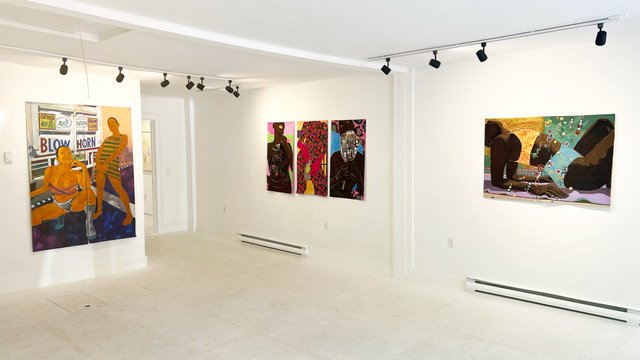
Presented at NADA Miami 2026, Great Art brings together new paintings by Donna Moylan, Andy Ness, and Erik Daniel White, responding to Tim Dlugos’s poem of the same name, written while he was dying of AIDS. Exploring the intimacy of shared attention and the ways images become woven into our relationships, the artists draw on art-historical and cultural references, moments of ecstasy and quietude, and depictions of people looking together. Their works reflect on art, memory, and the passage of time, and on how returning to familiar images can bring us back to the people we have loved, the experiences we have shared, and those who remain with us in their absence.
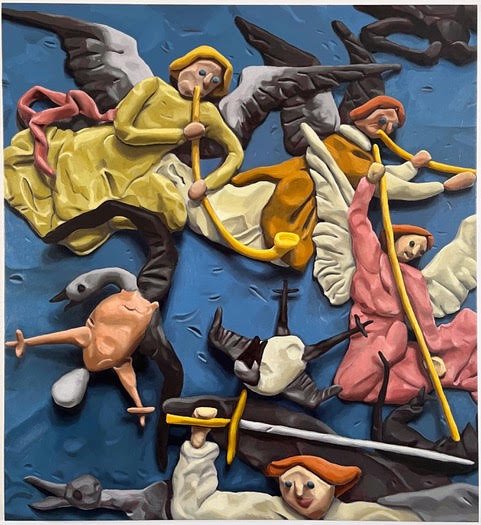
Erik Daniel White, The Fall of the Rebel Angels, after Bruegel, 2026, oil on linen, 23 x 21 in
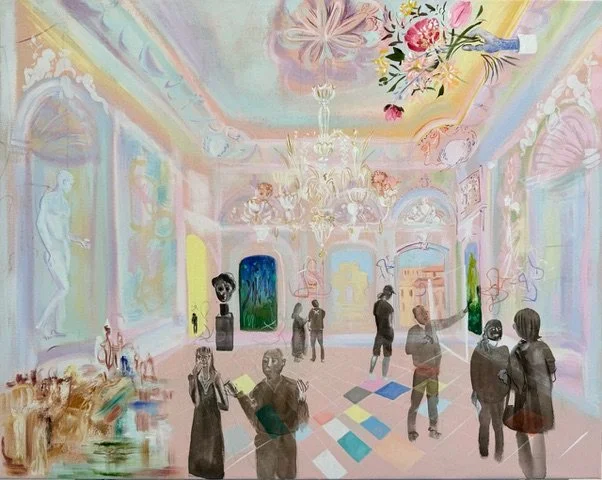
Donna Moylan, Artists in a Roman Gallery, 2026, acrylic on muslin, 24 x 30 in
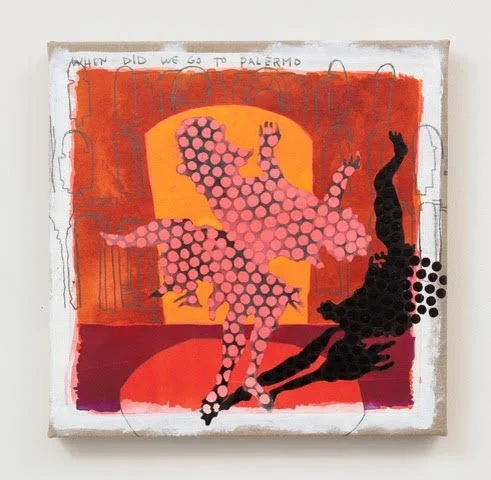
Andy Ness, When Did We Go to Palermo, 2026. Gouache, ink, metallic leaf, pigment dispersion, pencil on linen, 16 x 16 in
-
Ali Alamdar
Reed Anderson
Polly Apfelbaum
Franco Andres
Tod Bailey
Hannah Barrett
David Becker
Uta Bekaia
Justin Vivian Bond
Roddy Bottum
Caleb Brown
Richard Butler
Elijah Burger
Richmond Burton
Christopher Cascio
Carter Ernst
Dan Devine
Johnny Defeo
Alexandria Deters
Daniella Dooling
Mark Doty
Colton Dowling
Enid Ellen
James Esber
Eric Hibit
Steven Evans
Russell Etchen
Jane Fine
Gail Fitzgerald
Jeff Fleming
John Franklin
Tara Fracalossi
Betsy Friedman
Janice Freeman
Meghan Gerety
Matthew Gilbert
Daniel Gibson
Judy Glantzman
Mike Glier
Jim Goss
TJ Griffin
Oliver Halkowitz
Karen Heagle
Daniel Heidkamp
Shirley Irons
Elizabeth Insogna
Allison Hunter
Wes Holloway
Rinaldo Hopf
Scott Hunt
Bo Joseph
Roberto Juarez
Alyssa Kazew
David Kelley
Matt Knife
Phil Knoll
Wayne Koestenbaum
Kevin Larmon
Michael Lazarus
David Le June
Jill Levine
Chris Lively
Ario Elami
Jean-Paul Mallozzi
Joe Mama-Nitzberg
Mark McCray
Douglas Melini
Charles Merward
Andy Ness
Ariel Isaac Norman
Kate Mulholland
Matthew Bede Murphy
Robbie Moore
Cobi Moules
Donna Moylan
Mark Ponder
Cory Perry
Enoc Perez
Denise Prince
Preetika Rajgariah
RABIT
Rajab Ali Sayed
Luke Rose
Henk Rossouw
Kevin Sabo
Don Shewey
Jason Schneiderman
Laurel Sparks
Allison Schulnik
Ellen Siebers
Paul C. Smith
Stephen Truax
Gerardo Rosales
Elijah Ruhala
Michael St. John
Joseph Staley
Eric Stefanski
Lina Tharsing
Harrison Tenzer
Terry Suprean
Kevin Tobin
Harper Walters
Oliver Wasow
Michael Walden
Susan Wides
Eric Wolf
Brian Wood
Joachim West
Jade Yumang
Daniel Zamora
Bill Arning Exhibitions closed its storefront in Kinderhook, NY, on November 23. After five years of maintaining spaces in Houston (2020–2023) and the Hudson Valley (2022–2025), it has become clear that keeping a permanent storefront is no longer sustainable.
Like many galleries worldwide this past year, the regular exhibition program is winding down to focus resources on pop-up projects and select art fairs. This shift will allow continued support of artists and the presentation of work in new, flexible formats as the art world navigates changing economic realities.
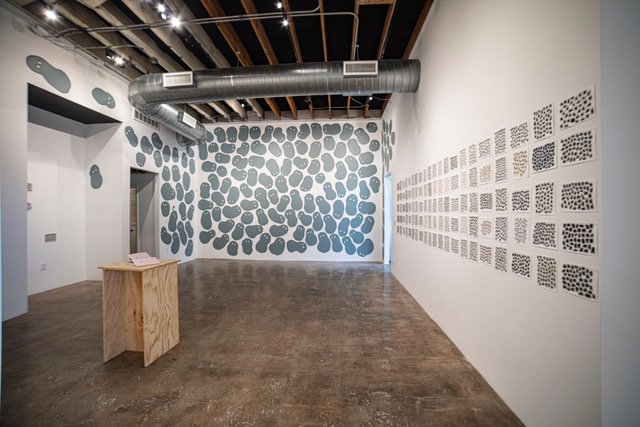
Russell Etchen: About Six Thousand Five Hundred Rocks, About One Thousand Five Hundred People, and Some Clover [BAE /Houston, July 9-August 22, 2021]
Preetika Rajgariah: Servicing Self BAE/Kinderhook, Sept 10 – Oct 30, 2022]